
1980 · auto motor und sport · Test & Technik · Zurück zur Natur

08/198010 Pages
For more magazine articles, see Iltis-related Magazine Articles.
auto motor und sport · 08/1980
Test & Technik
Zurück zur Natur
Titel: sech Geländewagen im Vergleich — Jeep CJ 7, Lada Niva, Land Rover V8, Mercedes 240 GD, Toyota Land Cruiser, VW Iltis.
Jean-Jacques Rousseau („Zurück zur Natur“) hätte seine helle Freude gehabt.
200 Jahre nach dem Tod des Genfer Denkers und Forderers nach mehr Naturverbundenheit drängt es — die Zulassungszahlen geländegängiger Automobile scheinen dies zu belegen — immer mehr zivilisationsmüde Automobilisten in den Wald, auf de Wiese und in die Wüste.

Lada Niva
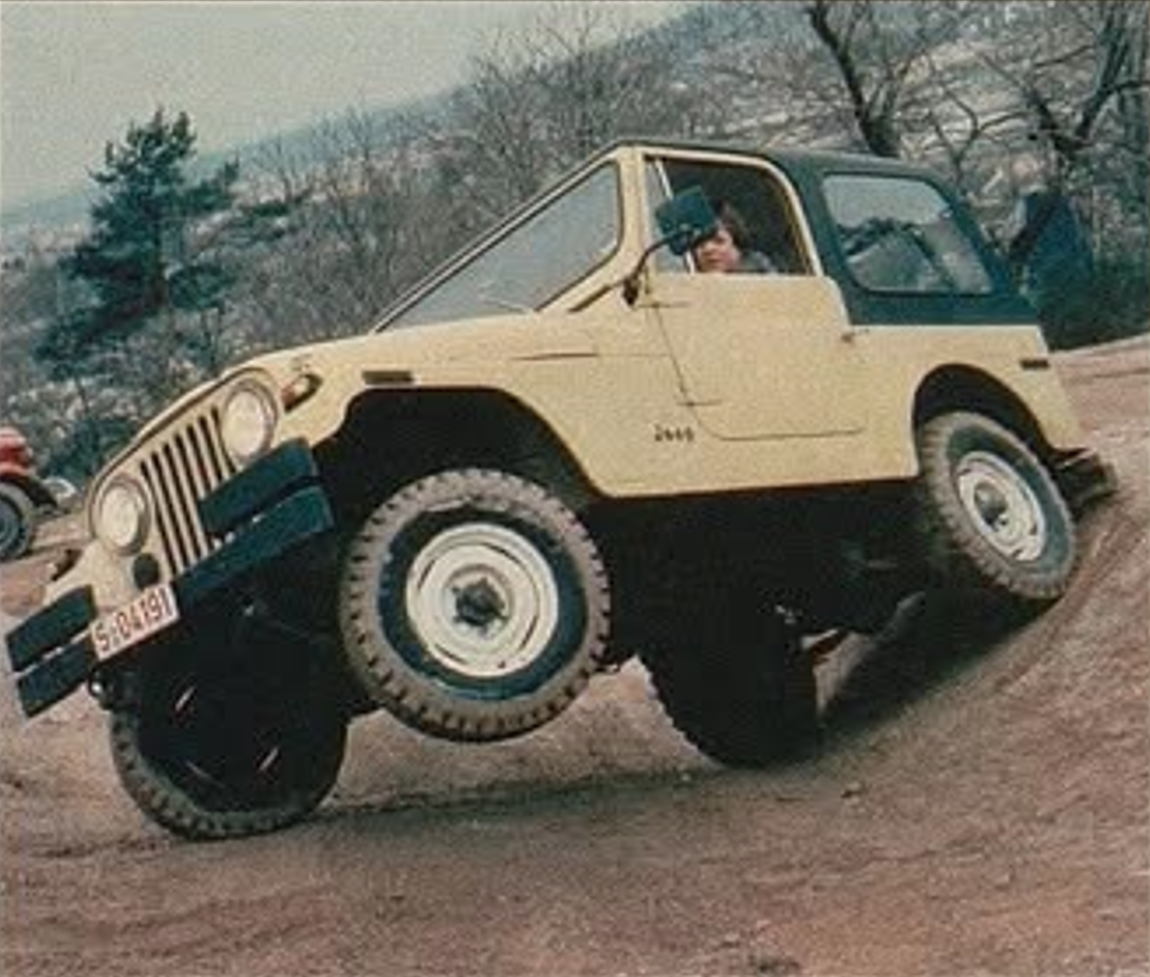
Jeep CJ 7

Toyota Land Cruiser
Geländewagen von echtem Schrot und Korn schrecken vor kaum einem Hindernis zurück — meist geht es auch dann noch weiter, wenn dem Fahrer bereits der Angstschweiß auf der Stirn steht. Komfort ist nicht gefragt — wohl aber die Fähigkeit, hüfthohes Wasser zu durchwaten, steile Hänge zu bezwingen und auch einen meterhohen Luftsprung klaglos zu verdauen.

Mercedes 240 GD
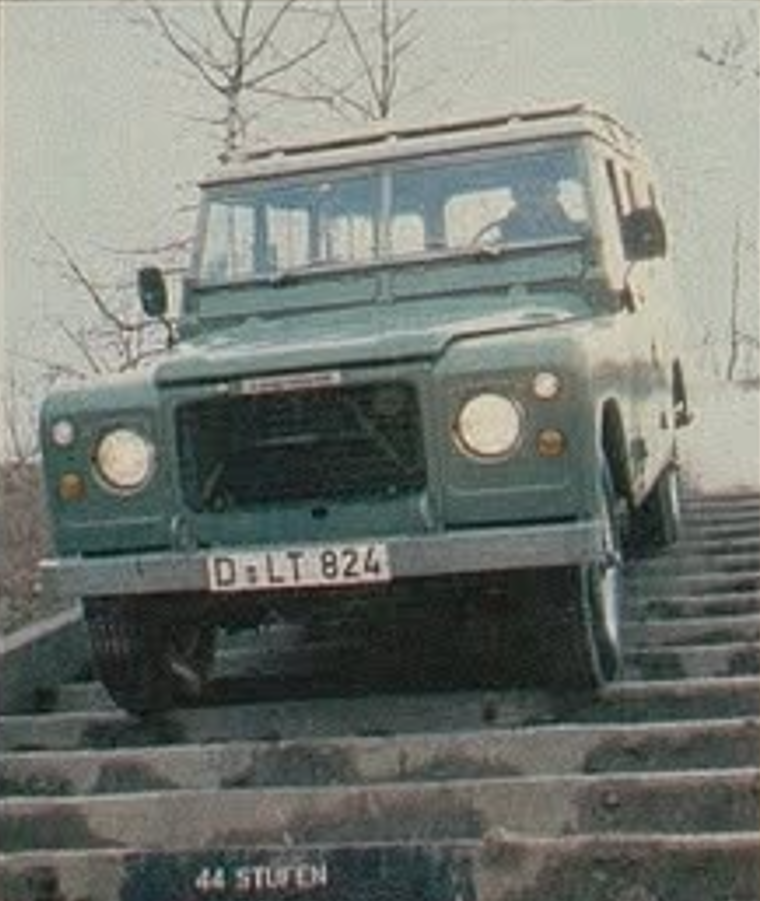
Land Rover
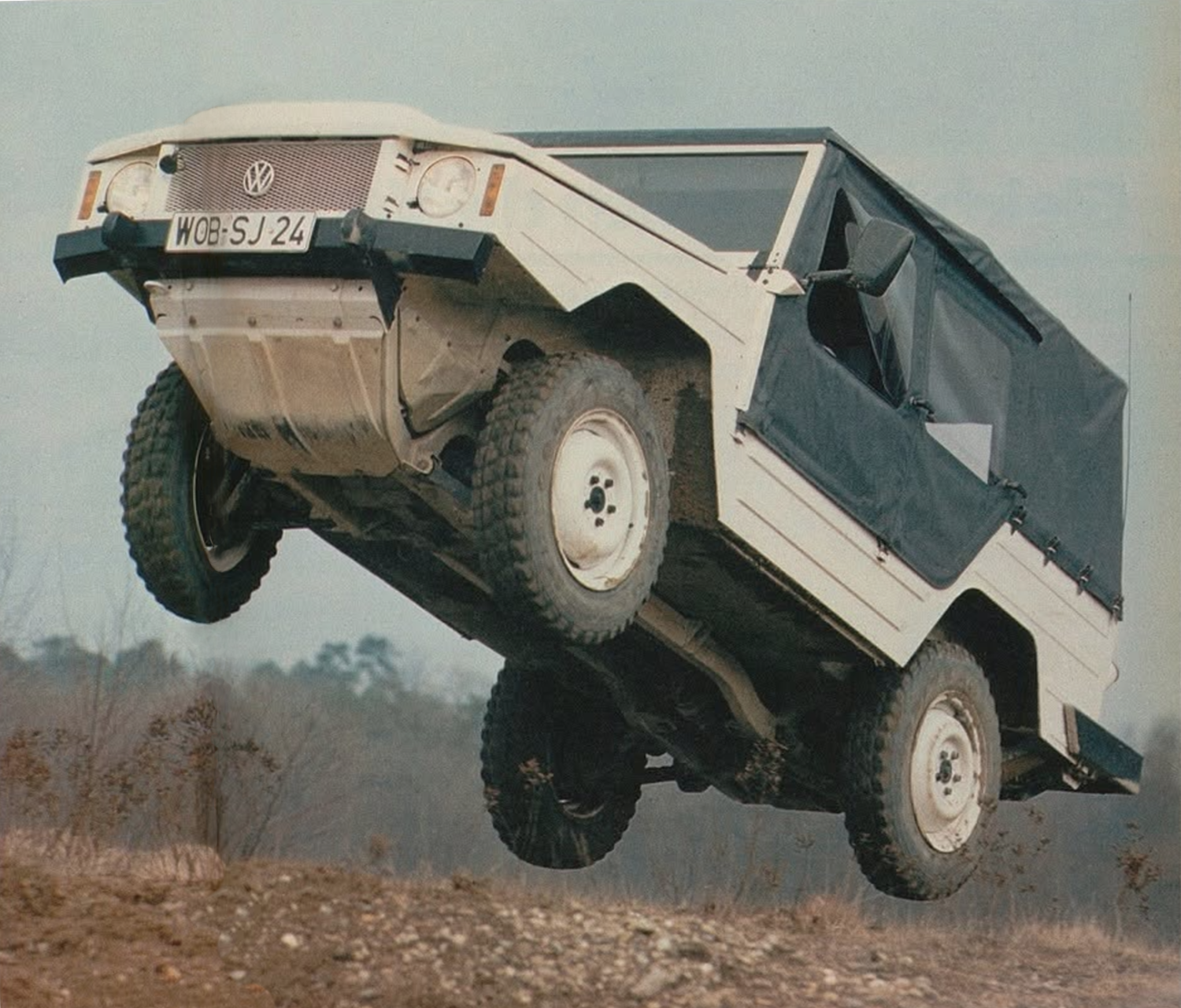
VW Iltis
Nicht alle freilich, die sich statt eines VW Passat lieber einen Lada Niva zulegen oder anstelle eines Mercedes 280 E fürs gleiche Geld das G-Modell mit dem Stern bestellen, wollen mit ihren vierradgetriebenen Allesüberwindern den Tuaregs in der Sahara einen Besuch abstatten.
„Mir ging es zunächst einmal darum“, bekennt Jeep-Fahrer und auto motor und sport-Redakteur Martin Breuninger, „ein originelles und ein offenes Auto zu besitzen. Daß es dazu noch gut kraxelt, soll mir recht sein.“
Wie Breuninger denken die meisten Geländewagen-Käufer, und zumindest in deutschen Landen bleibt ihnen auch gar nichts anderes übrig.
auto motor und sport überprüft Geländeautomobile deshalb zuerst einmal auf ihre Straßentauglichkeit hin — auch dann, wenn sich zum Vergleich die Profi-Garde der besonders Hartgesottenen stellt: der CJ 7 von Jeep in den USA, der Niva von Lada in Rußland, der Land Rover von Leyland in England, der Land Cruiser von Toyota in Japan und die beiden Gelände-Newcomer aus Deutschland, das G-Modell von Mercedes und der Iltis von VW.
Hart im Nehmen müssen Off Road-Freaks* in der Tat sein. Daß die Testkandidaten mit Ausnahme des Toyota und des Lada ihre Entstehung menschenverachtenden Säbelrasseln verdanken, wird schon beim Einstieg deutlich. (* Off Road-Freaks: Slang für Geländewagen-Freunde)
Vor allem der Jeep und mehr noch der ihrer hohen Einstiegsschwellen außerordentliche Gelenkigkeit und schmutzunempfindliche Bekleidung. Aber auch im Toyota und Rover kann nicht ohne Umstände Platz genommen werden — sie gilt es fast so umständlich zu besteigen wie einen Kleinlastwagen.
Einzig der Mercedes und der Lada erinnern in dieser Hinsicht an normale Personenwagen, wobei allerdings das zugunsten üppiger Bodenfreiheit hochgelegte Bodenblech auch hier schwungvolles Entern nahegelegt.
Im Cockpit der sechs Allesüberwinder kommen — je nach Wahl — alle Geschmacksrichtungen zur Geltung. Ob der Sinn nun nach limousinenhafter Wohnlichkeit steht (Lada), ob es der Geländewagen-Freund lieber mit funktioneller Sterilität hält (Mercedes), ob spartanischer Military-Look gewünscht wird (VW), der Stil der fünfziger Jahre (Toyota, Jeep) oder gar die Atmosphäre der Vorkriegszeit (Land Rover) — nichts ist bei Geländeautomobilen unmöglich.
Dies gilt auch und ganz besonders für den gebotenen Bedienungskomfort. Eine Leichtgängige Lenkung bieten einzig die Mobile von Toyota, VW und Mercedes, wobei letzteres seinen Fahrer nur dann entlastet, wenn für knapp 1,100 Mark das Servoaggregat geordert wurde.
Im Lada und im Jeep bedarf es da schon energischeren Kurbelns am dünnkranzigen Volant, doch erscheinen dem Piloten die notwendigen Lenkund Haltekräfte im Russen und im Amerikaner als geradezu spielerisch, wenn er zuvor in die Speichen des archaischen Land Rover zu greifen hatte.
Besonders gut bei Kräften muß der Rover-Fahrer auch beim Kuppeln und beim Bremsen sein, während sich der Schalthebel zwar knochig, aber meist widerstandslos durch die Schaltkulisse führen läßt.
auto motor und sport · 08/1980
Testing & Technology
Back to Nature
Title: Six off-road vehicles compared — Jeep CJ 7, Lada Niva, Land Rover V8, Mercedes 240 GD, Toyota Land Cruiser, VW Iltis.
Jean Jacques Rousseau (“Back to Nature”) would have been delighted.
200 years after the death of the Geneva thinker and advocate for a closer connection to nature, more and more motorists weary of civilization are drawn to the forest, the meadow and the desert – as evidenced by the registration figures for off-road vehicles.
Lada Niva
Jeep CJ 7
Toyota Land Cruiser
True off-road vehicles are hardly deterred by any obstacle – they usually keep going even when the driver is already sweating with fear. Comfort isn't a priority – but the ability to wade through waist-deep water, conquer steep slopes, and handle a meter-high jump without complaint is.
Mercedes 240 GD
Land Rover
VW Iltis
Not everyone who chooses a Lada Niva over a VW Passat, or orders a G-Class with the three-pointed star for the same price as a Mercedes 280 E, intends to take their four-wheel-drive off-roaders to visit the Tuareg in the Sahara.
“My primary goal,” admits Jeep driver and auto motor und sport editor Martin Breuninger, “was to own an original and open-top vehicle. The fact that it also handles off-road terrain well is a bonus.”
Most SUV buyers think like Breuninger, and at least in Germany, they don't really have any other choice.
auto motor und sport therefore first tests off-road vehicles for their suitability for the road—even when comparing them to the professional ranks of the most hardcore off-roaders: the Jeep CJ7 in the USA, the Lada Niva in Russia, the Leyland Land Rover in England, the Toyota Land Cruiser in Japan, and the two off-road newcomers from Germany, the Mercedes G-Class and the VW Iltis.
Off-road freaks do indeed have to be tough. That the test candidates, with the exception of the Toyota and the Lada, owe their existence to ruthless saber-rattling becomes clear right from the start.
Above all, the Jeep, and even more so its high sills, offer exceptional maneuverability and dirt-resistant upholstery. But getting into the Toyota and Rover isn't exactly easy either—it's almost as awkward as getting into a small truck.
Only the Mercedes and the Lada resemble normal passenger cars in this respect, although even here, the raised floorboards, designed for generous ground clearance, suggest a more dynamic stance.
In the cockpits of these six all-terrain vehicles, every taste is catered for, depending on the choice. Whether you're looking for limousine-like comfort (Lada), functional sterility (Mercedes), a spartan military look (VW), the style of the 1950s (Toyota, Jeep), or even the atmosphere of the pre-war era (Land Rover)—nothing is impossible when it comes to off-road vehicles.
This also applies, and especially so, to the ease of operation offered. Only the Toyota, VW, and Mercedes vehicles offer light steering, although the latter only provides this relief to the driver if the power steering unit is ordered for nearly 1,100 DM.
In the Lada and the Jeep, more vigorous turning of the thin-rimmed steering wheel is required, but the necessary steering and holding forces in the Russian and American vehicles seem almost effortless to the driver after having gripped the spokes of the archaic Land Rover.
The Rover driver also needs considerable strength when operating the clutch and brakes, while the gearshift lever, although stiff, usually moves smoothly through the gate.
 | Jeep CJ 7 Four-cylinder in-line engine, longitudinally mounted, water-cooled, side camshaft, displacement 2,471 cm³, bore x stroke 101.6 x 76.2 mm, compression ratio 8.24 : 1, 64 kW (87 hp) at 4,200 rpm, maximum torque 169 Nm at 2,800 rpm, four-speed gearbox, 21,568 DM. |
|
| |
||
 | Lada Niva Four-cylinder in-line engine, longitudinally mounted, water-cooled, overhead camshaft, displacement 1,560 cm³, bore x stroke 79.0 x 80.0 mm, compression ratio 8.5 : 1, 56 kW (76 hp) at 5,400 rpm, maximum torque 118 Nm at 3,000 rpm, four-speed gearbox, 16,795 DM. |
|
| |
||
 | Land Rover V8 Eight-cylinder V-engine, longitudinally mounted, water-cooled, central camshaft, displacement 3,528 cm³, bore x stroke 88.9 x 71.1 mm, compression ratio 8.13 : 1, 68 kW (92 hp) at 3,500 rpm, maximum torque 226 Nm at 2,000 rpm, four-speed gearbox, 33,950 DM. |
|
| |
||
 | Mercedes 240 GD Four-cylinder in-line engine, longitudinally mounted, water-cooled, overhead camshaft, displacement 2,399 cm³, bore x stroke 90.9 x 92.4 mm, compression ratio 21.0 : 1, 53 kW (72 hp) at 4,400 rpm, maximum torque 137 Nm at 2,400 rpm, four-speed gearbox, 35,482 DM. |
|
| |
||
 | Toyota Land Cruiser Six-cylinder in-line engine, longitudinally mounted, overhead camshaft, displacement 4,230 cm³, bore x stroke 94.0 x 101.6 mm, compression ratio 7.8 : 1, 99 kW (135 hp) at 3,600 rpm, maximum torque 290 Nm at 1,800 rpm, four-speed gearbox, 25,895 DM. |
|
| |
||
 | VW Iltis Four-cylinder in-line engine, longitudinally mounted, water-cooled, overhead camshaft, displacement 1,760 cm³, bore x stroke 79.5 x 86.4 mm, compression ratio 8.2 : 1, 55 kW (75 hp) at 5,500 rpm, maximum torque 135 Nm at 2,800 rpm, four-speed gearbox, 36,562 DM. |
|
The Mercedes seems to be from another world by comparison, its controls all exceptionally easy to use.
However, there are other reasons why the Mercedes is so easy to handle.
The G-Class offers a level of driving safety on all types of roads that puts it far ahead of its competitors. With slight understeer in corners and equally benign oversteer when fully loaded, this German-Austrian joint venture* presents even inexperienced drivers with minimal challenges. The brakes, although prone to premature locking during emergency braking, are exceptionally stable. (* The G-Class is produced in Graz, Austria, by the Geländefahrzeug-Gesellschaft (GFG), a joint venture between Daimler-Benz and Steyr-Daimler-Puch.)
That such well-behaved handling cannot be taken for granted in high-riding SUVs is emphatically demonstrated by the competition from the USA.
The Jeep startles its driver at the limit with remarkably hectic reactions, and in extreme cases, the inside wheels lifting off the ground in corners leave no doubt as to how the Jeep intends to punish overly exuberant drivers.
But even cautious drivers frequently find themselves breaking out in a sweat in this American off-roader. When it comes to deceleration, the Jeep's brakes (discs at the front, drums at the rear) do not seem to perform their task in a synchronized manner—a circumstance that leads to breathtaking swerving even during minor braking maneuvers.
Several emergency stops in succession are also not well-suited to the braking system designed for American highways: In such cases, the effectiveness deteriorates alarmingly.
The Land Rover makes fewer demands on its driver. The narrow-track vehicle oversteers itself during fast cornering, and the limits of the brakes are determined more by the driver's calf muscles than by the car's mechanics.
However, the Rover's precise steering, which has a lot of play, requires constant course corrections, ensuring continuous attention even on leisurely highway drives.
The off-road vehicles from Lada, Toyota, and VW reveal average driving capabilities. The Russian vehicle, which understeers in corners, impresses with satisfactory handling. Its brakes, however, leave something to be desired.
The four drum brakes of the VW Iltis also show signs of wear under heavy use, and the Wolfsburg-built vehicle reacts rather abruptly to even slight pressure on the brake pedal. The Bundeswehr's (German Army) vehicle has few weaknesses in its handling—it corners largely neutrally and tracks satisfactorily on highways.
Where the Iltis reaches its limits was revealed by a high-ranking engineer from the Ingolstadt development department*. “In fast downhill bends,” the prominent technician explained, “the Iltis tends to roll over the turned front wheel.” VW therefore took preventative measures—with a standard, robust roll bar. (* The VW Iltis was developed by Audi in Ingolstadt.)
The tall Toyota also seems unusually prone to rollovers, but the auto motor und sport test drives proved otherwise.
At the limit, the heavyweight Japanese SUV behaves in a controllable manner, at least on level ground, and its brakes provide remarkably good deceleration. The only thing that conveys a feeling of insecurity is the very imprecise, indirect Land Cruiser steering.
However, the Toyota's ride becomes truly adventurous on poor roads, where the Japanese SUV performs a veritable St. Vitus' dance. “A suspension in the conventional sense,” a tormented test editor noted in the Toyota's logbook, “apparently does not exist.”
But the Jeep also suggests that its occupants use cushioning chewing gum, as painful collisions between the upper and lower teeth are almost unavoidable during brisk Jeep driving.
Only the Mercedes and the Lada offer the usual level of ride comfort. They are able to compensate for road imperfections almost as well as conventional sedans.
The fact that the Mercedes still performs better in terms of comfort than its Russian competitor, which costs only half as much, is due to its low transmission noise. Only in the G-Class and the VW Iltis are the occupants spared any acoustic cues from the comparatively extensive gear system of an off-road vehicle. In contrast, the competitors unleash a veritable inferno of grinding, howling, and rattling noises while driving, which mostly drown out all other driving sounds.
All the more bothersome, then, was the irritating drone of the 2.4-liter four-cylinder diesel engine in the test Mercedes (240 GD), which renders the 1.8-ton vehicle completely inadequate in terms of performance (see table of measured values). Because the accelerator pedal in the 240 GD must therefore remain firmly planted to keep up with traffic, the small diesel also consumed a comparatively large amount of fuel (see table of measured values).
This made the irritating drone of the 2.4-liter four-cylinder diesel engine in the test Mercedes (240 GD) all the more bothersome, as it resulted in completely inadequate performance for the 1.8-ton vehicle (see table of measured values). In fact, none of the six SUVs are particularly fuel-efficient. Even the relatively modestly powered 1.6-liter and 1.7-liter off-roaders from Lada and VW consume above-average amounts of the increasingly expensive fuel, even on the open road.
The Toyota Land Cruiser with its 4.2-liter six-cylinder engine and the Land Rover V8 with its 3.5-liter eight-cylinder engine must be considered real gas guzzlers. However, their high thirst is also due to their demanding performance. While the Japanese vehicle boasts exceptionally good driving dynamics, the British SUV impresses with its unrivaled pulling power.
Such efficient pulling power is especially appreciated when traversing rough terrain. Because, in extreme cases, heavy acceleration can lead to spinning wheels that dig themselves into the loose soil—resulting in blisters on your hands until you've managed to dig the helplessly scrambling vehicle free.
Naturally, the large-displacement engines of the Toyota and Land Rover offer plenty of low-end torque, while the Lada's small four-cylinder engine lacks a bit of punch at lower revs.
However, since it, like its competitors, features a selectable low-range transfer case, this deficiency is manageable—just as it is with the sluggish diesel engine of the Mercedes 240 GD and the gruff four-cylinder of the Jeep.
Both can also be equipped with more powerful engines upon request: Mercedes's range culminates in a 2.8-liter six-cylinder, and the Jeep even offers a five-liter V8 that operates at very low revs but, unfortunately, is one of the more ferocious gas guzzlers (see the tables on page 69 for engine options).
What can be accomplished off-road is only partly a matter of the engine—weight distribution, tires, and the ability to lock the axle differentials play a crucial role. Four-wheel drive alone isn't enough, as the tests conducted by auto motor und sport clearly demonstrated.
Whether it's tackling inclines that are difficult even on foot or crossing sandy sections, the driver is always best served by two of the tested vehicles: the Mercedes GD and the VW Iltis can continue even when all the other participants in the comparison test have to throw in the towel.
Admittedly, the differences aren't all that significant, and each of the six off-roaders is capable of considerably more than most drivers would give up.
Only the Land Rover and the Jeep showed certain weaknesses on an 80 percent slope at the Daimler-Benz Unimog test track near Rastatt. In these vehicles, the front axle is so heavily unloaded on such hills, which appear through the windshield like an almost vertical wall, that the front wheels spin — an annoying consequence of the unfavorable weight distribution caused by their relatively lightweight engines.
Large undulations, especially when driven diagonally, almost always spell disaster for Toyotas, Ladas, Jeeps, and Rovers. One front and one rear wheel lose traction, while the other two simply lock up.
However, those driving a Mercedes or an Iltis still have an ace up their sleeve. With just two quick movements, they can switch the differentials to a rigid drive, directing power precisely where it's needed.
One might think that steep descents wouldn't pose a problem for any off-road vehicle, since optimal traction isn't the primary concern.
But that's far from the truth. Since applying the foot brake results in a spinout and, if everything seems to be conspiring against the driver, a rollover, the driver is entirely reliant on engine braking and a low gear ratio.
Except for the Lada, all the other vehicles are well-equipped for this. They chug leisurely downhill even when the passengers are in danger of sliding out of their seats—the Lada, on the other hand, whose off-road gearing is a bit too high, quickly picks up speed, causing a queasy feeling in the pit of the stomach.
On rough terrain, differences also emerge in ease of use. Before the off-road fun can begin, the front-wheel drive must be engaged in the Jeep, Mercedes, VW, and Toyota. This is easiest in the Mercedes: its transfer case is synchronized, and the shift lever moves effortlessly from one position to the other, while the other competitors require a certain amount of force.
With the Toyota, there's an extra step: it has free-wheeling hubs on the front axle that have to be engaged manually—so a walk around the car is unavoidable before heading out into the woods and fields.
Unlike these four, the Rover and the Lada have constant all-wheel drive—so you only need to engage the low-range gearing and, if the surface is slippery, lock the center differential. Both are child's play, as the levers on the center console operate smoothly enough.
Once all the preparations for a trip into nature are complete, however, the occupants are in for some hard work. Because one thing becomes undeniable after just a few meters on rough terrain: most truly capable off-road vehicles, with their short wheelbase and rock-hard suspensions, are the perfect torture devices of modern times.
Only the Mercedes offers decent suspension comfort, and, to a lesser extent, the Lada and the Land Rover.
The other three off-roaders, however, thrash their occupants so violently that one fears for dental fillings and intervertebral discs. The Toyota, in particular, delivers tremendous blows—anyone not wearing a seatbelt must be prepared for a painful encounter with its rather unforgiving roof.
The Jeep and the VW behave a touch more civilly, although they too clearly belong to the marsupial species. Zoological associations are especially apt with the VW. It hops like a rabbit over short, successive bumps, often with all four wheels off the ground, before making what is usually a rather rough landing.
For the occupants, this is a real ordeal: they quickly climb towards the roof and can only be thankful that the VW SUV's roof is made of soft fabric.
The motorized disciples of Jean-Jacques Rousseau, this comparison makes clear, must be people who primarily praise what makes things tough.
cdt. / G. L.
| Six SUVs Compared: Advantages and Disadvantages | |||||
| | |||||
 | Jeep CJ 7 Advantages
| Lada Niva Advantages
|  | ||
| | |||||
 | Land Rover V8 Advantages
| Mercedes 240 GD Advantages
|  | ||
| | |||||
 | Toyota Land Cruiser Advantages
| VW Iltis Advantages
|  | ||